When professional development stays separate from daily work
Most professionals want to keep growing.
Not only by attending training, but by becoming better at what they actually do every day.
Yet development often ends up in a different place than the work itself.
Reflection remains private.
Team conversations stay general.
Portfolios are written, but rarely revisited.
Plans for change exist — but daily routines continue unchanged.
Not because people do not care.
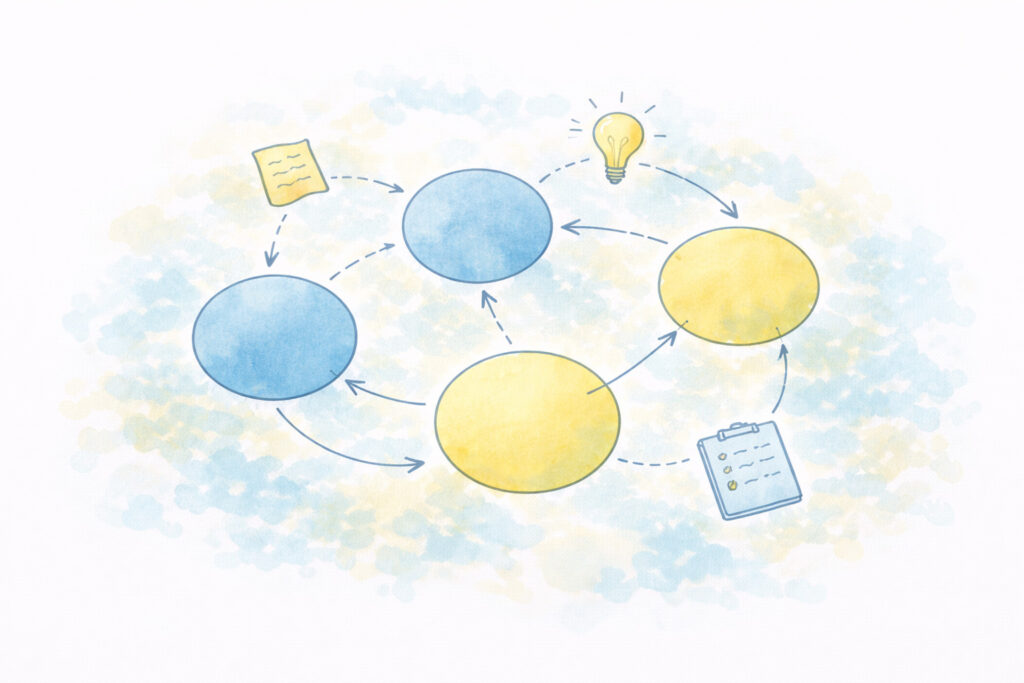
But because personal learning, collaboration and daily practice are not yet connected.
Making professional development concrete in practice
This is where I work with professionals, teams and leaders in higher education and professional organisations.
We start by looking at everyday situations:
Where do people hesitate?
What do they try to improve?
What remains difficult to discuss?
Over the years, my photography has trained me to look carefully before intervening.
I sometimes use that way of looking here as well.
Through small visual or observational exercises, practice becomes visible — and therefore easier to talk about.
An image becomes clearer not by adding more elements, but by adjusting focus and framing.
Development works in a similar way: once you can see it, you can share it.
Personal development becomes concrete:
not something you “should demonstrate”,
but something you can point to and talk about.
For example:
- preparing conversations about growth with more confidence
- articulating why you choose a certain approach
- recognising patterns in your own practice
- using a portfolio as a thinking tool instead of a document
Professional development leading to shared change
After working together, development usually feels calmer and more natural.
Professionals
- know better what they are trying to improve
- can explain their choices and progress
- use feedback more deliberately
Teams
- build on each other’s experiences
- make direction explicit
- support each other’s growth more easily
Organisations
- connect individual growth to collective change
- see development in everyday practice instead of only in documents
How I approach this
I work inside existing practice — not next to it.
My background in teaching, educational leadership and research shapes how I guide these processes across disciplines and professional fields.
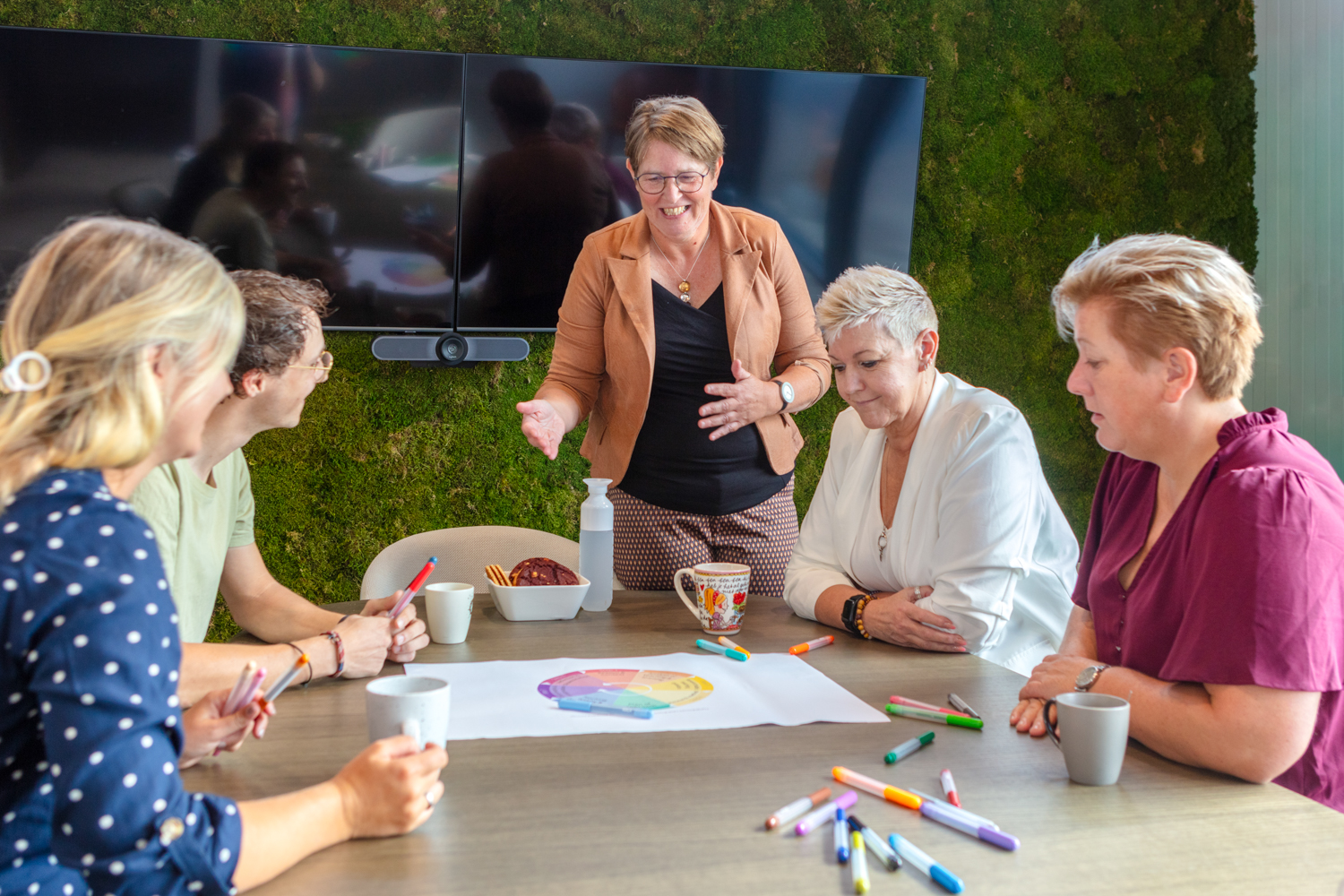
We start from real situations and make them discussable.
Sometimes analytically, sometimes visually, often by slowing down what usually passes quickly.
I act as a thinking partner:
structuring reflection, asking precise questions and helping translate experience into workable steps.
Having led and supported development processes myself, I know the tensions between reflection, assessment, time pressure and organisational expectations.
The aim is not development as an extra task.
It is development that becomes meaningful because it helps people do their work.
It is development that is meaningful, visible and sustainable over time.
Getting in touch
IIf this resonates, feel free to reach out.
We can start with a conversation about what development currently looks like in your context — and what you would like to see differently.
You can message me here or email me at info@irmact.com.
“Irma is an experienced, dedicated and knowledgeable scholar, networker, and leader. She has vast experience of leading collaborations, networks, and interdisciplinary teams and project development in different settings. She is very organized and energetic, and she gets things done within a frame of professional togetherness. In other words she is a great collaborator and leader, who gets my strongest recommendations.”
Katarina Mårtensson
Professor Division for Higher Education Development
Educational Sciences, Department of Educational Sciences
Lund University, Sweden