You’re responsible for a programme or curriculum in higher education. You may be a programme leader, curriculum coordinator, academic director, or head of department. You want it to be good, genuinely good. Not just accreditation-proof.
Curriculum Challenges in Higher Education
Everything seems to be changing at once. Students are changing. AI raises new questions about learning and assessment. Workload is already high. And expectations around quality certainly haven’t gone away.
You may recognise this:
- What are students actually learning here, and for what future?
You used to know. Now you’re less sure. Students use AI in ways you can’t fully oversee. And what used to count as “good assessment” no longer holds up. - Your programme runs because your people push through.
And you know that’s not sustainable. If someone drops out or gets sick, the programme starts to crack. - Students show up less, avoid contact, and sometimes seem to do the minimum to get through.
You see it in the room, in their learning and in the results. But what is causing it? And what can you realistically change? - You keep making changes, but you’re not sure they address the real problem.
A change to assessment here, an AI initiative there, another working group. Everyone is busy, but is the programme actually getting better? - Everyone wants something different.
Students, teaching staff and management all bring different priorities. Then there’s accreditation. You’re the one trying to make it add up to a coherent programme.
The difficulty is that none of these questions stands on its own. Assessment connects to learning outcomes. AI raises questions about what students still need to learn. Student engagement is shaped by how the programme is designed. And every change affects the people who have to make it work.
So where do you start, and what really needs to change?
How I Help with Curriculum and Educational Development
When everything is connected, the answer is rarely another quick fix. I help you step back and make sense of what is really happening. Where is the real problem? What is connected, and what isn’t? What needs to change, and what can stay?
From there, we make clear, deliberate choices, informed by evidence and experience. Choices that fit your programme, your students and the people who have to make it work. I don’t come in with a ready-made solution. We find a way forward that makes sense in your context and works in practice.
What a Good Curriculum Looks Like
The curriculum fits. What students learn, how they learn, and how you assess it make sense together. AI has found its place. Students are more engaged and more motivated. You notice it in the room and in the results.
You know what you’re steering towards. Choices have been made deliberately, and you can explain why. Those choices hold, even when the accreditation committee comes by.
The programme runs without burning everyone out. There is enough space to keep improving without constantly adding more. And you can lead again. Not just managing what goes wrong, but building what you actually believe in.
How we work together
Every situation is different, so we shape the work around what your programme and team actually need.
Curriculum Development
Curriculum scan
Something feels off, but you’re not sure where to start. We take a step back and look at the curriculum as a whole. Where does it work well? Where does it no longer quite fit? And where would change make the biggest difference?
Focused curriculum development
You already know where attention is needed. Perhaps assessment no longer fits what students need to learn. Courses may not connect as well as they should. Or AI raises questions that cannot be solved within a single course. We focus on that part of the curriculum and work out what needs to change.
Curriculum redesign
Sometimes a more fundamental rethink is needed. You may be developing a new programme or substantially redesigning an existing one. I help you and your team make clear choices about what students should learn, how the curriculum fits together and what this means in practice.
Interested in Game-Based Learning?
Sometimes a game can offer a different way for students to engage with complex ideas, practise skills or experience the consequences of their choices. I design game-based learning experiences together with Jasper van Winden. Explore Game Based Learning →
Strategic Educational Development
Not every educational challenge is a curriculum question. You may want to rethink how you support teaching staff. Or bring more coherence to different educational initiatives. Or decide where to focus when several developments compete for attention. I help you step back, bring different perspectives together and decide what really needs attention.
Strategic Days and Facilitated Development Sessions
Sometimes you already know the question. What you need is the right conversation. Perhaps you have a programme team together for a day. Or you need to make choices that require different perspectives around the table.
I help design and facilitate that process. So your time together leads to more than good conversations, a wall full of post-its and a long list of things to follow up. You leave with greater clarity, shared choices and concrete next steps.
Interested in Game-Based Learning?
Sometimes a game can offer a different way for students to engage with complex ideas, practise skills or experience the consequences of their choices. I design game-based learning experiences together with Jasper van Winden. Explore Game Based Learning →
Why work with me?
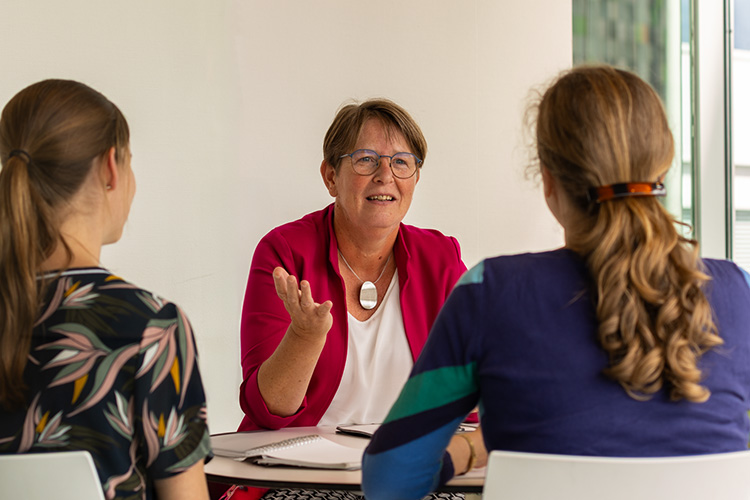
I know higher education from the inside. I started as a scientist in life sciences and taught university students for many years. From there, I moved into educational and curriculum development. I also led the development of a new interdisciplinary undergraduate curriculum. So I know what it takes to turn educational ideas into something that works for students and staff.
I combine that experience with an evidence-informed and practical approach. I want to understand what lies underneath a problem. I ask questions, bring different perspectives together and turn complexity into something workable. As an independent consultant, I bring an outside perspective. But I work with you, rather than telling you what to do.
Have an educational or curriculum challenge you’d like to think through? Let’s talk.
We can meet in person on a Teams or Zoom call, whatever works for you. Reach out at info@irmact.com and we’ll plan something.
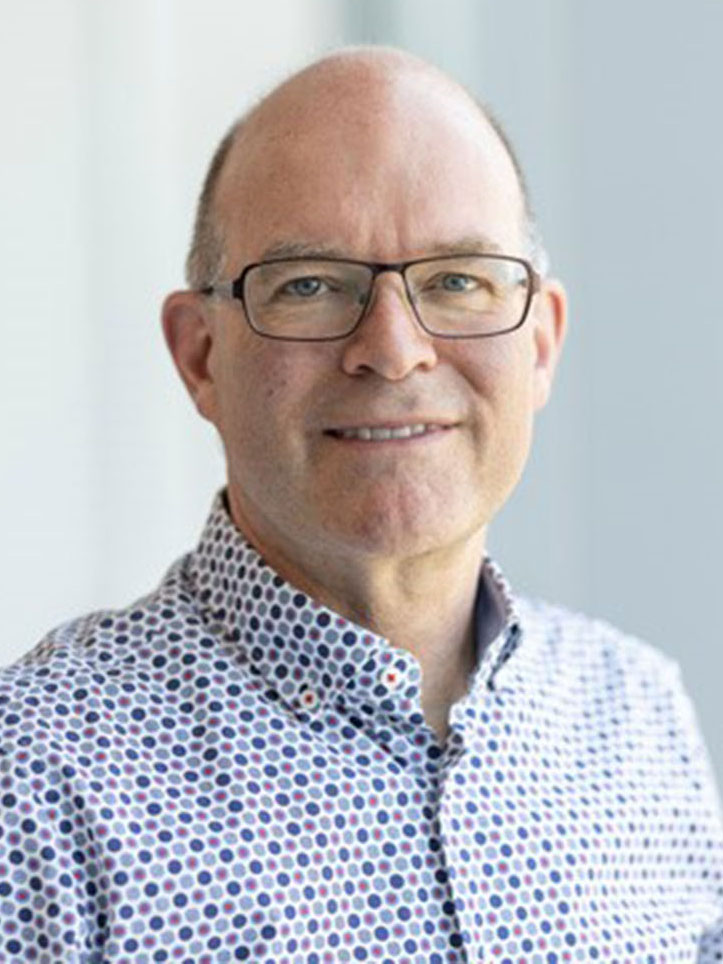
”Irma has dedicated herself for many years to pharmacy education at Utrecht University. Thanks to her efforts, the Department of Pharmaceutical Sciences now has a widely supported foundation for educational innovation and staff development. I have greatly enjoyed working with her and appreciate her practical approach and the way she has put ‘scholarly teaching’ firmly on the map at our university.”
Robbert Jan Kok, Programme Director Pharmaceutical Sciences and Professor of Pharmaceutics, Utrecht University, Utrecht, The Netherlands”